How Personalization Engines Create Better Digital Experiences
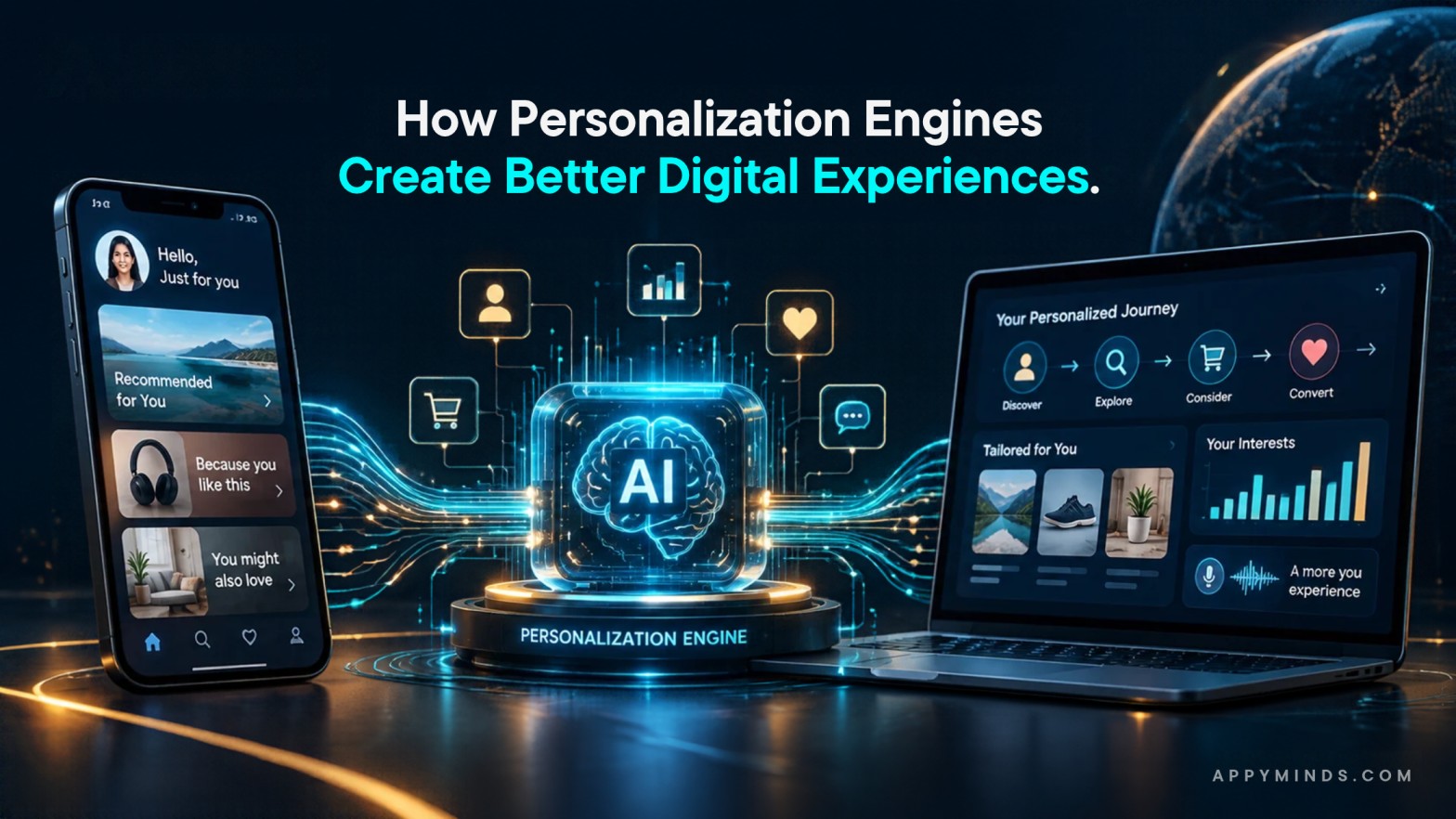
Discover how AI personalization engines analyze real-time user behavior to deliver tailored content, product recommendations, and seamless customer journeys. Learn how intelligent personalization boosts engagement, increases conversions, and builds lasting customer loyalty across modern websites and digital platforms.
Introduction
Think back to the last time you clicked on a website that was way off from what you were looking for. If I'm right, you hit the back button in seconds. Today’s online visitors expect digital experiences that truly understand their intent, preferences and browsing habits. This is where personalization engines come in. A personalization engine does not display the same homepage, product list or call to action to every visitor. Instead, it uses behavioral data and machine learning to change the experience in real time. McKinsey research shows companies that get personalization right generate 40% more revenue from those efforts than competitors relying on static pages.
What is Personalization Engine?
A personalization engine is simply intelligent software that monitors how people use your website or app, predicts what they are most likely to need next and updates what they see on the screen in milliseconds.
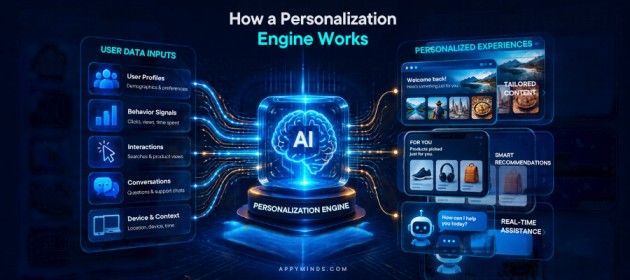
Three building blocks keep it running smoothly behind the scenes:
- First-party data collection: Getting real interaction signals such as pages viewed, search terms, clicks, cart activity, previous purchase.
- Dynamic Audience Segmentation: Segmenting visitors by live behavior and purchase stage, rather than broad, old demographics.
- Continuous Machine Learning: Test the actual user interactions and refine the recommendations on each visit.
How AI-Driven Transformation Makes Static Pages Responsive
The old-school personalization was based on hard and fast manual rules, such as “if someone visits Page A, show Banner B”. That approach falls apart pretty quickly as your product catalog or your audience grows. Modern AI replaces guesswork with real-time adaptability:
- Live Page Adaptation: If a visitor spends time reading about a specific service or product category, AI automatically highlights related case studies, offers and CTAs during the same session.
- Next-Best-Action predictions: We use machine learning to analyze patterns across thousands of user journeys to recommend the right add-on, comparison guide or booking prompt before the visitor loses interest.
- Smarter Conversational Support: Askly Chatbot and other AI chat assistants can deliver personalized answers and lead-capture questions based on the page a visitor is viewing.
- Micro-Segmentation at Scale: AI identifies the complex behavior of your audience, enabling you to deliver targeted emails and on-site messages that really resonate.
How Personalisation Impacts Key Business Metrics
| Business Metric | What Changes on Your Site or App | Proven Benchmark |
|---|---|---|
| Conversion Rates | Visitors see relevant offers and CTAs right when they are ready to decide. | Up to 10–15% lift in conversions (McKinsey) |
| User Engagement | Bounce rates drop because irrelevant clutter is replaced with useful suggestions. | 74% of marketers report higher engagement (Econsultancy) |
| Customer Retention | Returning users enjoy a faster, frictionless experience tailored to past habits. | Lower churn and stronger repeat visits |
| Marketing ROI | Budgets focus on high-intent segments instead of generic mass campaigns. | 26% higher open rates on personalised email subjects (Statista) |
Real-World Examples of Brands Nailing Personalization
- Amazon (Prediction of E-Commerce): Amazon’s recommendation engine is responsible for about 35% of all e-commerce sales. It looks at your browsing history and compares items that are often bought together.
- Spotify (Habit-Based Discovery): Listen time, skips and micro-genres are used to create personalized playlists that bring tens of millions of listeners back every week with Discover Weekly and others.
- Sephora (Interactive & Omnichannel User Experience): Shoppers can find the right products online and in physical stores using a combination of app purchase history, skin-profile quizzes and AR virtual try-ons.
- Starbucks (Contextual Loyalty): The Starbucks app suggests relevant drinks based on the user’s mobile order history, time of day and local weather.
4 Simple and Practical Ways to Customize Website Content
- Combine and clean your data: Bring together your website analytics, CRM data and customer support software to get the whole picture of each user.
- Simplify high-traffic touch points: Start by optimizing your homepage hero banner, product/service recommendation modules, exit-intent popup and follow up email sequences.
- Improved product recommendations: AI product recommendation modules and smart chat widgets can direct users to answers without the need to click through menu systems.
- Test, measure and improve: Run simple A/B tests on personalized page versions vs. your standard layout to validate real, positive, bottom-line results.
Common Mistakes to Avoid
- Ignoring Data Privacy: Transition away from intrusive third-party tracking toward transparent, consent-based first-party data aligned with GDPR and India’s DPDP Act.
- Crossing the “Creepy” Line: Good personalization is like a helpful store associate, not someone watching you over your shoulder. “Don’t tell them too much about you, but keep it on the purpose of that particular session.”
- Providing the Engine with Outdated Data: Awkward recommendations result from out-of-date product catalogs and duplicate CRM records. Regularly audit your data sources.
- Over-Engineer Day One: Don’t build something big and custom on day one. Begin with modular AI tools on your top converting pages and scale as you see your results scale.
Conclusion
Personalization engines are no longer reserved for billion-dollar tech giants. When you combine clean first-party data, practical AI tools, and respect for user privacy, every visitor gets a smoother path from first click to loyal customer. Want to build smarter, personalised digital experiences for your website or SaaS platform? Explore custom AI workflows, intelligent chatbots, and conversion-focused web solutions at AppyMinds.
Frequently Asked Questions (FAQs)
1. What is a Digital Marketing Personalization Engine?
This AI software tracks users’ activity and likes in real time offering personalized content, product recommendations and discount offers to each website visitor.
2. How does personalization engine impact conversion rate?
Personalization engines are helping to generate leads and sales by suggesting the products and calls to action that are most relevant to a user’s interests, at the time they are most likely to respond.
3. Is personalization hard for small and medium businesses?
Nope. Startups can start with clean first party data and basic audience segmentation and modular AI tools such as chatbots or recommendation blocks and scale to full predictive automation.
4. What does a personalization engine need to know to work?
They use 1st party data, from your website or CRM, like pages visited, clicks, search queries, cart activity, past purchases, and user preferences.
5. Data protection for personalization engines
The personalization engines of today are designed to work within privacy regulations such as GDPR and India’s DPDP Act, anonymize sensitive data and use consent-based first-party data to preserve user trust.
About the author

Santosh Shet
Santosh Shet is the Founder of Appyminds and a technology entrepreneur with over 20 years of experience in software development, web applications, mobile apps, AI solutions, and business automation. He helps businesses transform ideas into scalable digital products through modern web development, mobile applications, intelligent automation, and AI-powered solutions. Santosh regularly writes about artificial intelligence, software development, digital transformation, SaaS products, and emerging technology trends.